Paediatric orthopaedics involves the diagnosis and treatment of musculoskeletal conditions in children, such as fractures, congenital deformities, and growth abnormalities. Treatment options vary depending on the specific condition and its severity, ranging from physical therapy and bracing to surgical interventions. Advances in technology, and minimally invasive surgical techniques, have revolutionised paediatric orthopaedic care, offering more precise treatment options and faster recovery times for young patients.
Treatment often involves non-surgical methods like bracing, physical therapy, or casting. In some cases, surgical intervention may be necessary, such as corrective surgeries for clubfoot or hip dysplasia. Early detection and intervention are crucial for better outcomes.
Non-Surgical Treatment
Physical Therapy
This involves exercises and stretches to improve strength, flexibility, and range of motion, as well as to correct musculoskeletal imbalances.
Orthotic Devices
Braces, splints, and orthotic inserts can help support and stabilise joints, correct alignment issues, and promote proper growth and development.
Casting
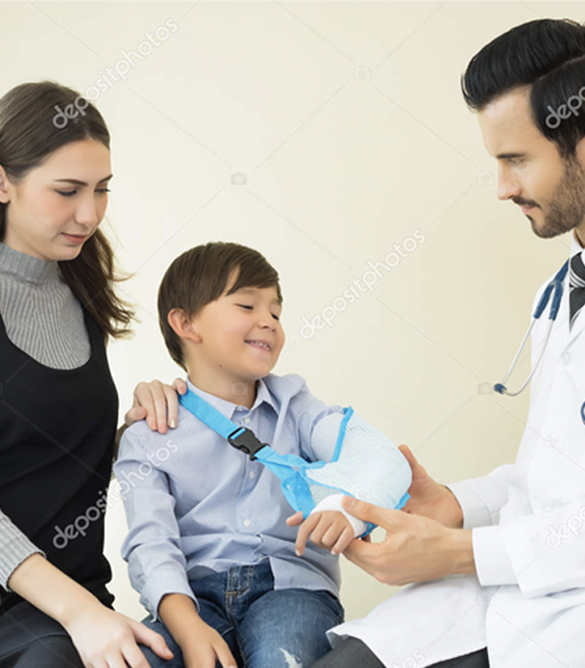
Plaster or fibreglass casts are used to immobilise and protect injured or misaligned bones, allowing them to heal properly.
Traction
This involves the application of a pulling force to realign bones or relieve pressure on the spine in conditions like scoliosis.
Activity Modification
Adjusting activities or sports to minimise stress on affected joints or bones, promoting healing and preventing further injury.
Medication
In some cases, pain relievers, anti-inflammatory drugs, or medications to manage underlying conditions like juvenile arthritis may be prescribed.
These non-surgical interventions are often effective in managing paediatric orthopaedic conditions and promoting optimal growth and development without the need for surgery.