
PATIENT - REPORTED OUTCOME MEASUREMENTS (PROMs)
A Patient-Reported Outcome Measurements survey is a special tool used within healthcare; its purpose is to capture patients' views concerning own health status, quality of life, and the results of medical treatments. These questionnaires focus on the outcomes of symptoms, function, or general well-being after receiving certain care or having a particular intervention.
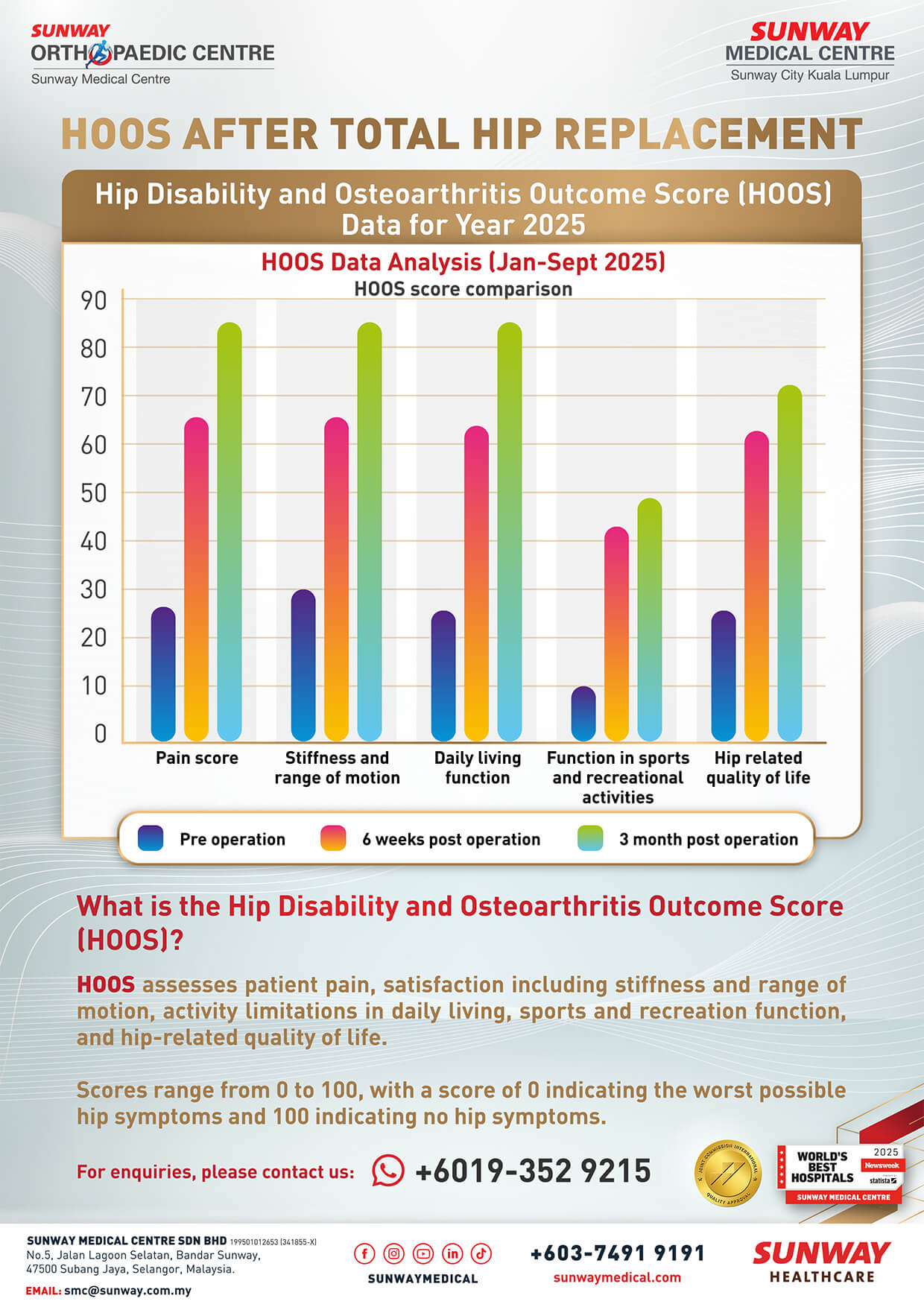
The Hip Disability and Osteoarthritis Outcome Score (HOOS) is a validated patient-reported measure used to assess the effectiveness of orthopaedic interventions, including joint preservation and replacement procedures.
Our data demonstrates progressive and clinically meaningful improvement from pre-operative baseline to 6 weeks and 3 months post-operatively. Significant gains are observed in pain reduction, daily function, and quality of life, while sports and recreational function continues to improve steadily in line with rehabilitation.
These outcomes highlight the effectiveness of our surgical interventions and post-operative care, reinforcing our commitment to clinical excellence, evidence-based practice, and optimal patient recovery.
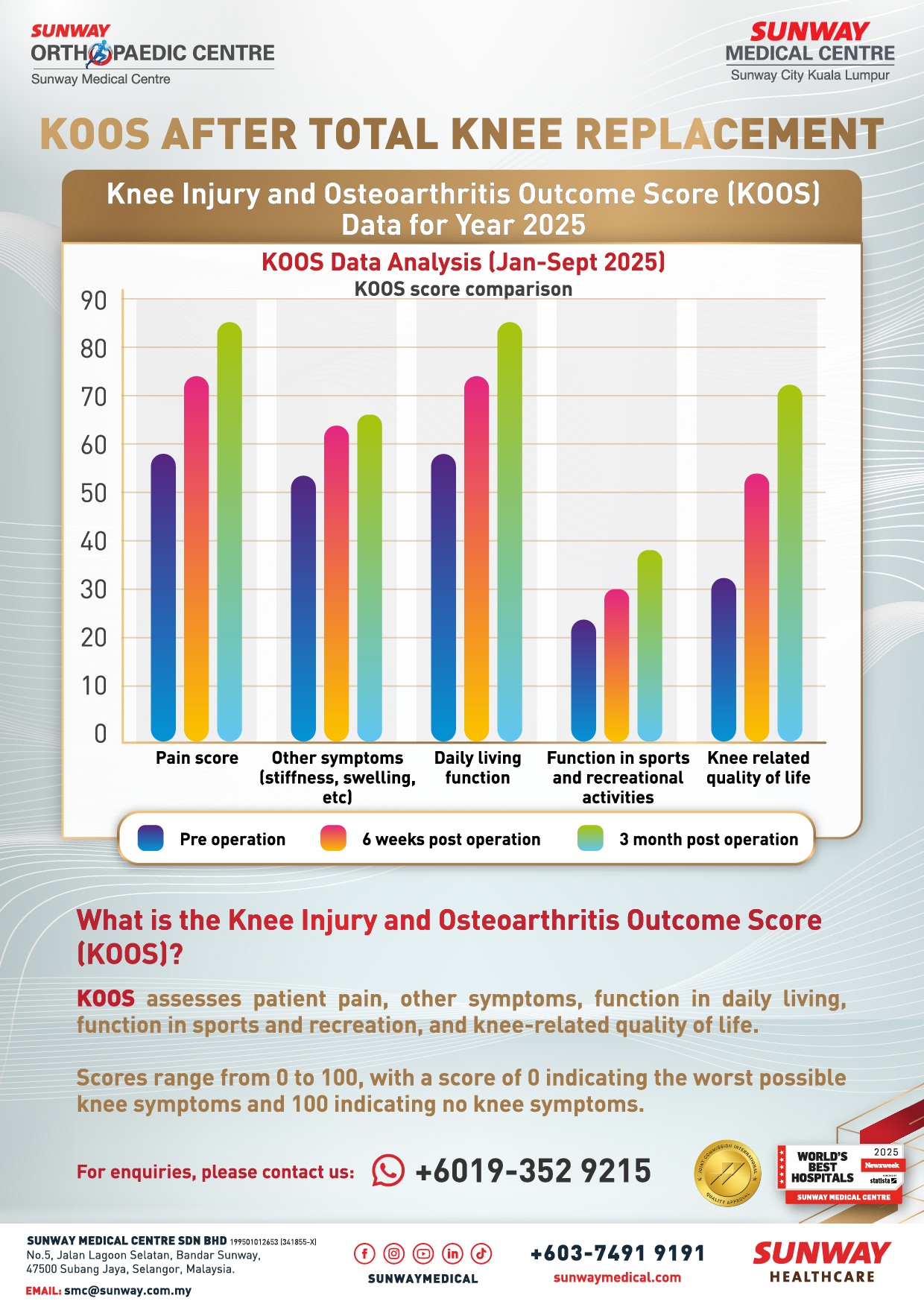
The Knee Injury and Osteoarthritis Outcome Score (KOOS) is a validated patient-reported measure used to assess outcomes for knee conditions.
Our data highlights consistent improvement throughout the post-operative recovery period, with clinically important gains seen from baseline to 6 weeks and 3 months after surgery. Patients experienced notable improvements in pain relief, daily function and quality of life, with sports and recreational function continuing to progress alongside rehabilitation.
These outcomes reflect the success of our surgical interventions and post-operative care, underscoring our commitment to delivering evidence-based care and supporting the best possible recovery for our patients.

Patient-reported outcomes for trigger finger cases were evaluated at Sunway Orthopaedic Centre using validated tools, including the Visual Analogue Scale (VAS) and Brief Michigan Hand Questionnaire (bMHQ). Pain reduction and hand function improvement were evaluated over a 3‑month period, with scores recorded before treatment and once again at Month 3 to evaluate effectiveness.
The mean change in PROMs demonstrates a strong positive trend in both pain relief and hand function. Pain scores decreased markedly by Month 3, and B‑MHQ functional scores increased, indicating improved hand use and reduced symptoms. Overall, significant improvement in patient-reported pain and hand function were observed by the third month of trigger finger treatment.
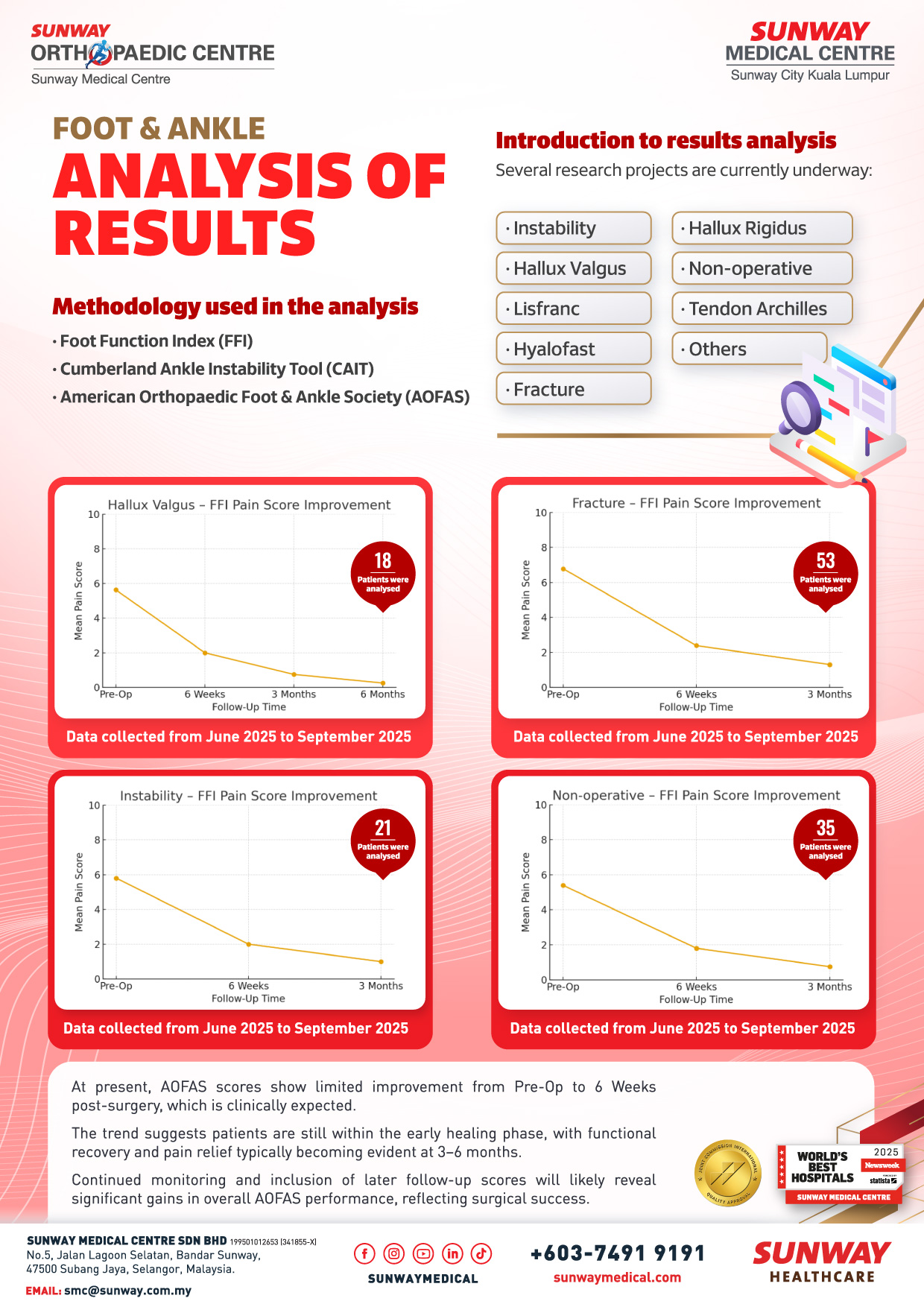
Foot and ankle outcomes were evaluated at Sunway Orthopaedic Centre using validated assessment tools, including the Foot Function Index (FFI), Cumberland Ankle Instability Tool (CAIT), and American Orthopaedic Foot & Ankle Society (AOFAS) score.
The findings demonstrate improvements across a range of foot and ankle conditions. There is a consistent reduction in pain and improvement in functional performance from pre-treatment to the 6-week and 3-month follow-up periods. Patient-reported outcomes for fractures, non-operative cases, ankle instability, and hallux valgus also show measurable improvements, supporting the effectiveness of current clinical management strategies.
Continued data collection and longer-term follow-up will be important to further assess sustained recovery and overall functional outcomes. These findings support ongoing efforts to enhance evidence-based care and optimise treatment pathways.