
Patient - Reported Outcome Measurements (PROMs)
A Patient-Reported Outcome Measurements survey is a special tool used within healthcare; its purpose is to capture patients' views concerning own health status, quality of life, and the results of medical treatments. These questionnaires focus on the outcomes of symptoms, function, or general well-being after receiving certain care or having a particular intervention.
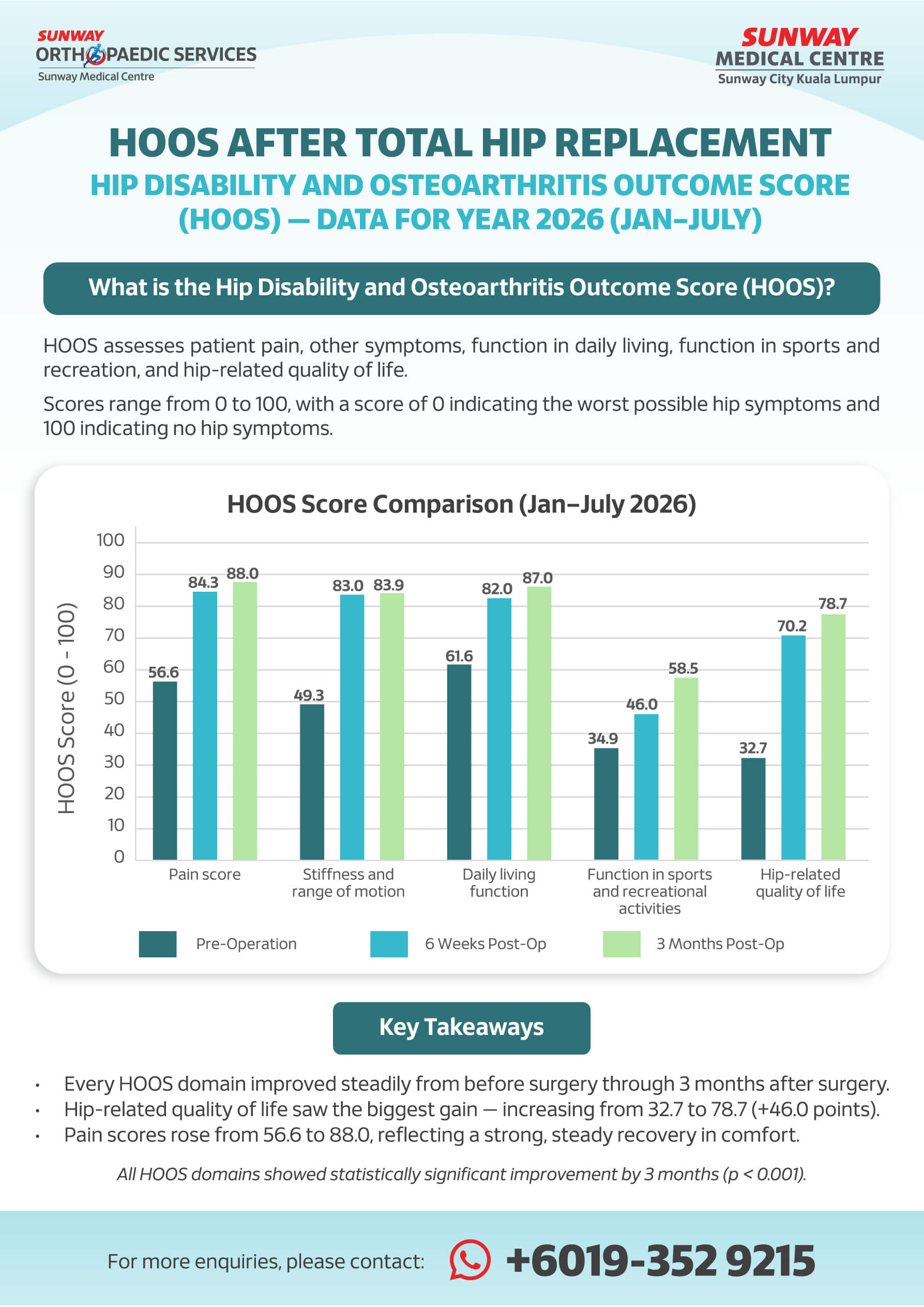
The Hip Disability and Osteoarthritis Outcome Score (HOOS) assesses patient pain, other symptoms, function in daily living, function in sports and recreation, and hip-related quality of life. Scores range from 0 to 100, with a score of 0 indicating the worst possible hip symptoms and 100 indicating no hip symptoms.
Every HOOS domain improved steadily from before surgery through 3 months after surgery. Hip-related quality of life saw the biggest gain, increasing from 32.7 to 78.7 points. Pain scores also rose substantially from 56.6 to 88.0, reflecting a strong, steady improvement in comfort.
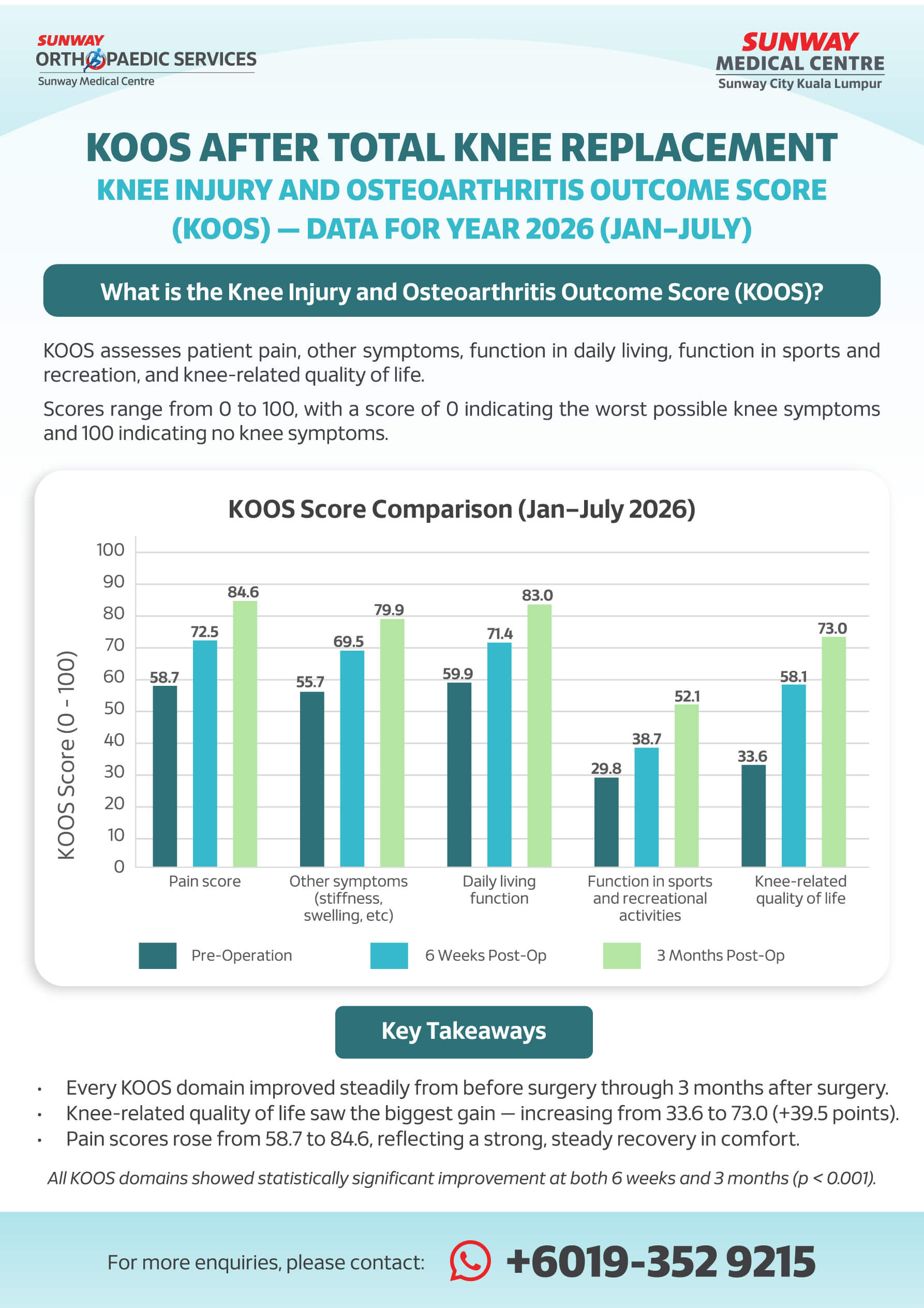
The Knee Injury and Osteoarthritis Outcome Score (KOOS) assesses patient pain, other symptoms, function in daily living, function in sports and recreation, and knee-related quality of life. Scores range from 0 to 100, with a score of 0 indicating the worst possible knee symptoms and 100 indicating no knee symptoms.
Every KOOS domain improved steadily from before surgery to 3 months after surgery. Knee-related quality of life saw the biggest gain, increasing from 33.6 to 73.0 points, while pain scores rose from 58.7 to 84.6, reflecting a strong, steady improvement in comfort.
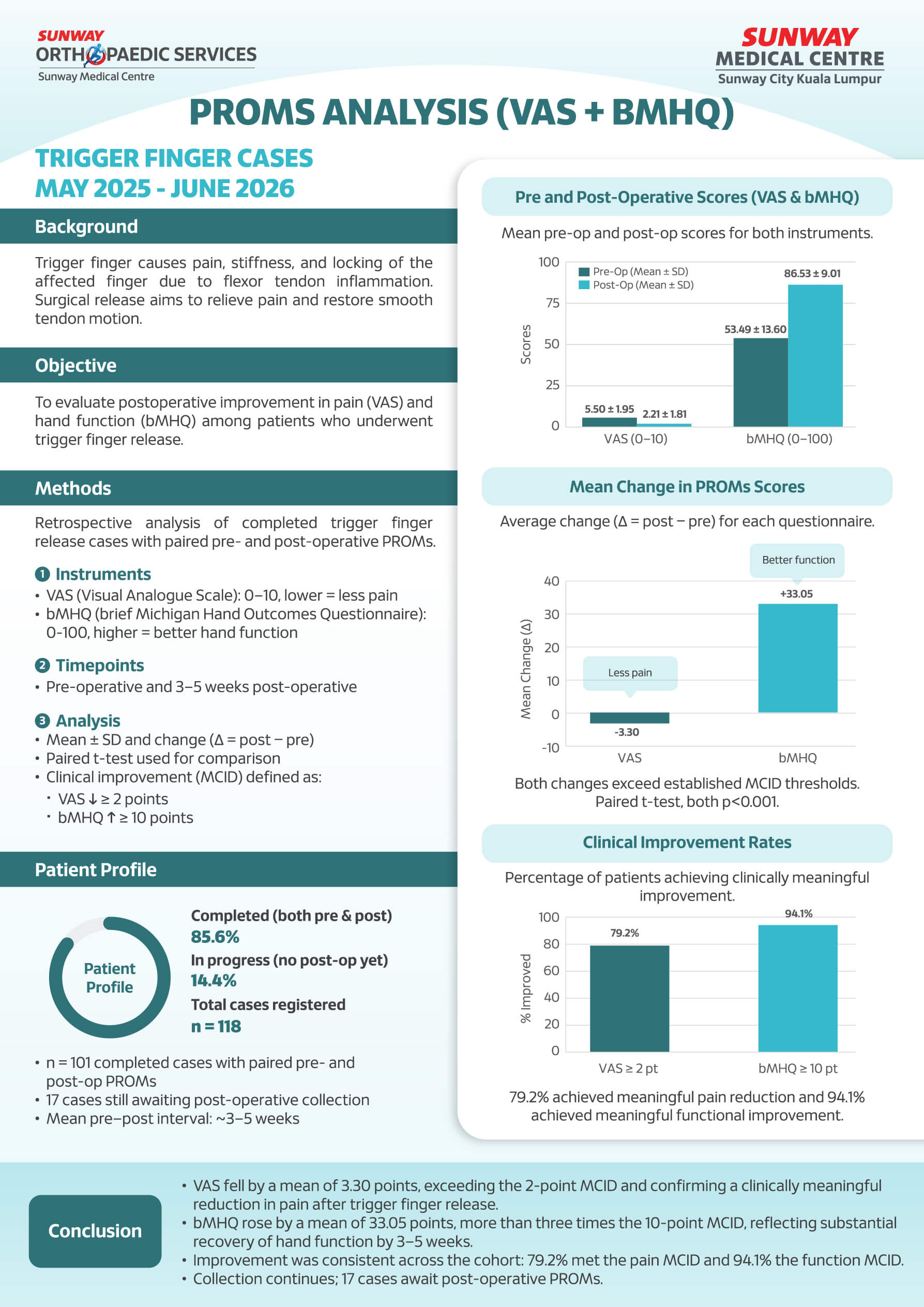
This analysis evaluated postoperative improvement in pain (VAS) and hand function (bMHQ) among 101 completed trigger finger cases from May 2025 to June 2026.
VAS scores fell by a mean of 3.30 points, exceeding the 2-point MCID and confirming a clinically meaningful reduction in pain after trigger finger release. bMHQ scores rose by a mean of 33.05 points, more than three times the 10-point MCID, reflecting substantial recovery of hand function by 3 to 5 weeks. Improvement was consistent across the cohort, with 79.2 percent meeting the pain MCID and 94.1 percent meeting the function MCID. Data collection continues, with 17 cases still awaiting post-operative PROMs.
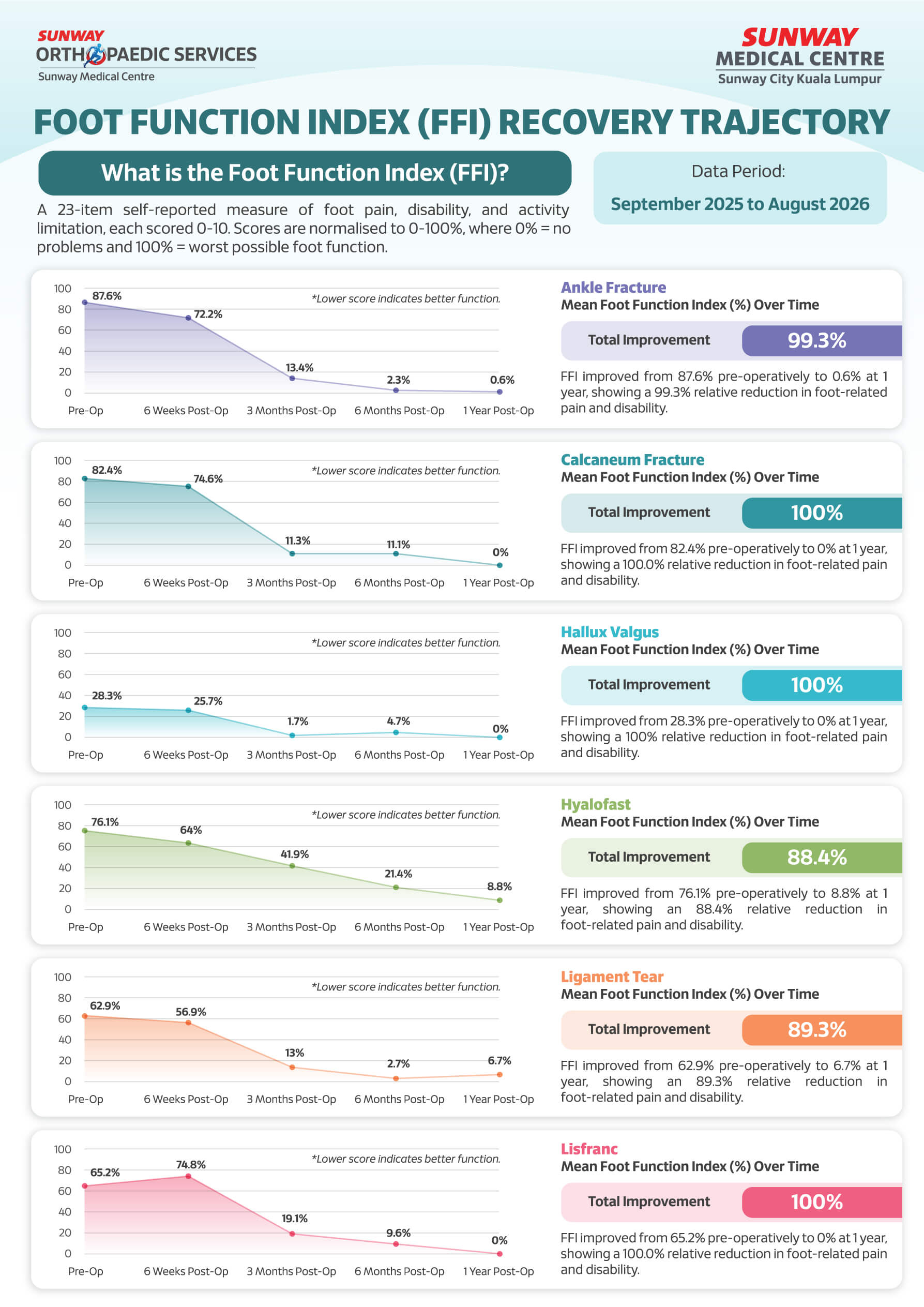
The Foot Function Index (FFI) is a 23-item self-reported measure of foot pain, disability, and activity limitation, each scored 0 to 10. Scores are normalised to 0 to 100 percent, where 0 percent represents no problems and 100 percent represents worst possible foot function.
Across all six foot and ankle conditions observed from September 2025 to August 2026, patients showed strong recovery in Foot Function Index (FFI) scores. Calcaneum fracture, hallux valgus, and Lisfranc patients achieved 100 percent relative reduction in foot-related pain and disability, while ankle fracture patients saw a relative reduction of 99.3 percent, ligament tear patients 89.3 percent, and Hyalofast patients 88.4 percent.
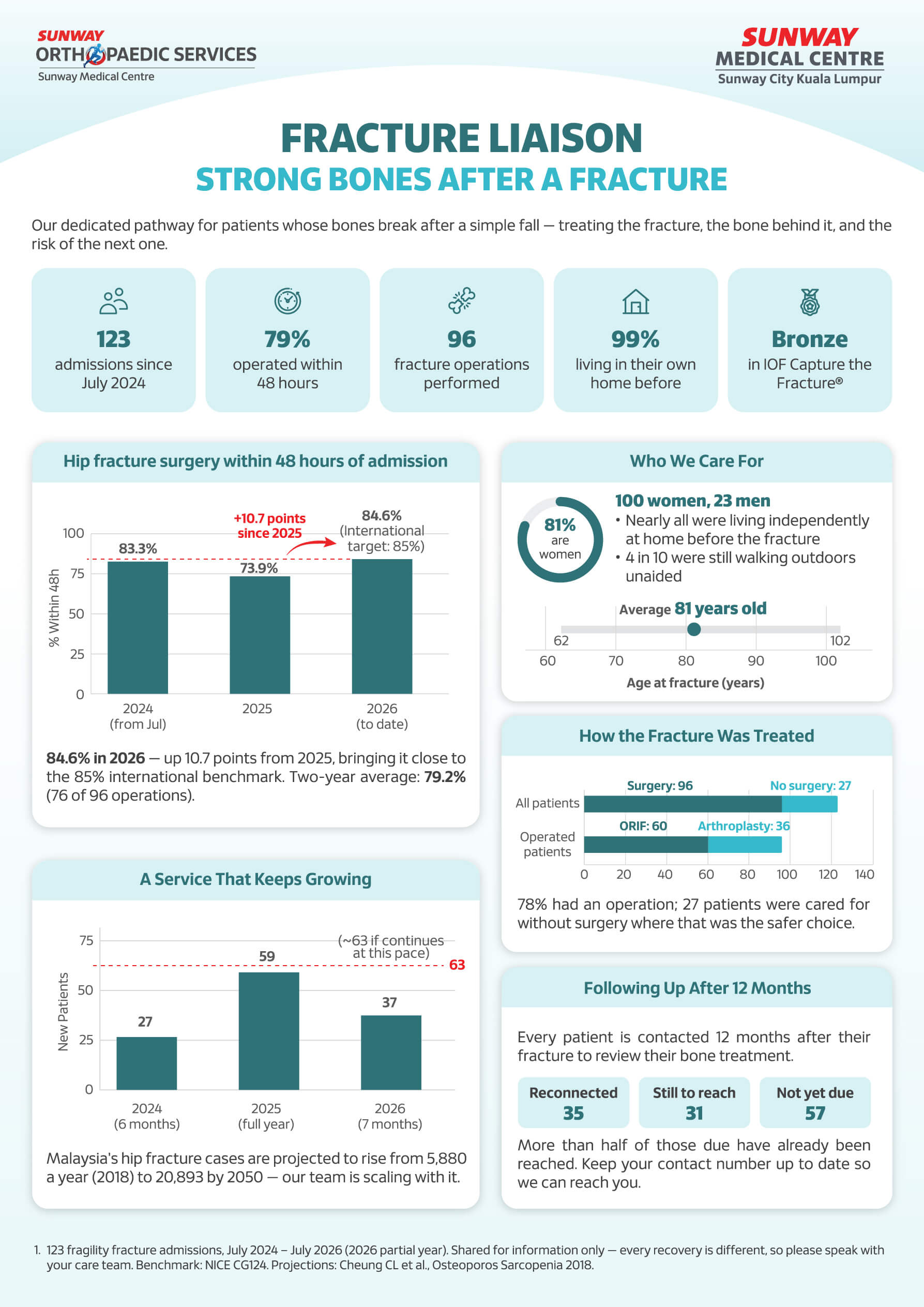
Since July 2024, Sunway Orthopaedic Services' Fracture Liaison pathway has supported 123 fragility fracture admissions. In 2026, 84.6 percent of hip fracture surgeries were completed within 48 hours, close to the 85 percent international benchmark. Of all patients, 78 percent had surgery, while 27 patients were managed non-surgically. Patients are, on average, 81 years old and predominantly female, having lived independently prior to their fracture.
The service has grown steadily, from 27 new patients in 2024 to 59 in 2025, and the number of new patients is expected to reach around 63 by the end of 2026. More than half of the patients due for 12-month follow-up have already been successfully reconnected with the service.
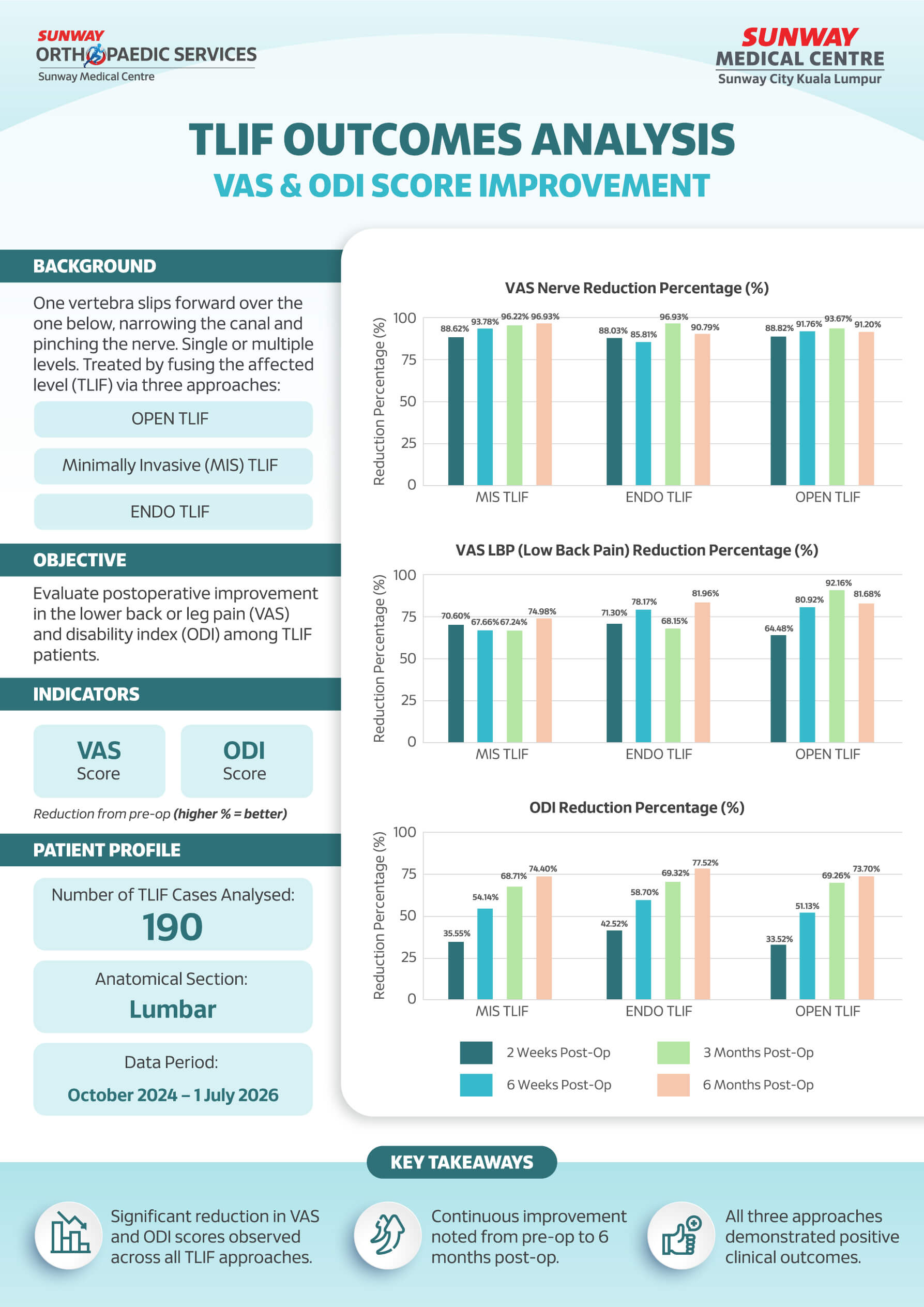
This analysis evaluated post-operative improvement in the lower back and leg pain (VAS) and disability index (ODI) among 190 TLIF patients from October 2024 to 1 July 2026.
The results showed a significant reduction in VAS and ODS scores across all TLIF approaches, namely Open TLIF, Minimally Invasive (MIS) TLIF and Endo TLIF. Continuous improvement was observed from pre-operation to 6 months post-operation, and all three approaches demonstrated positive clinical outcomes.
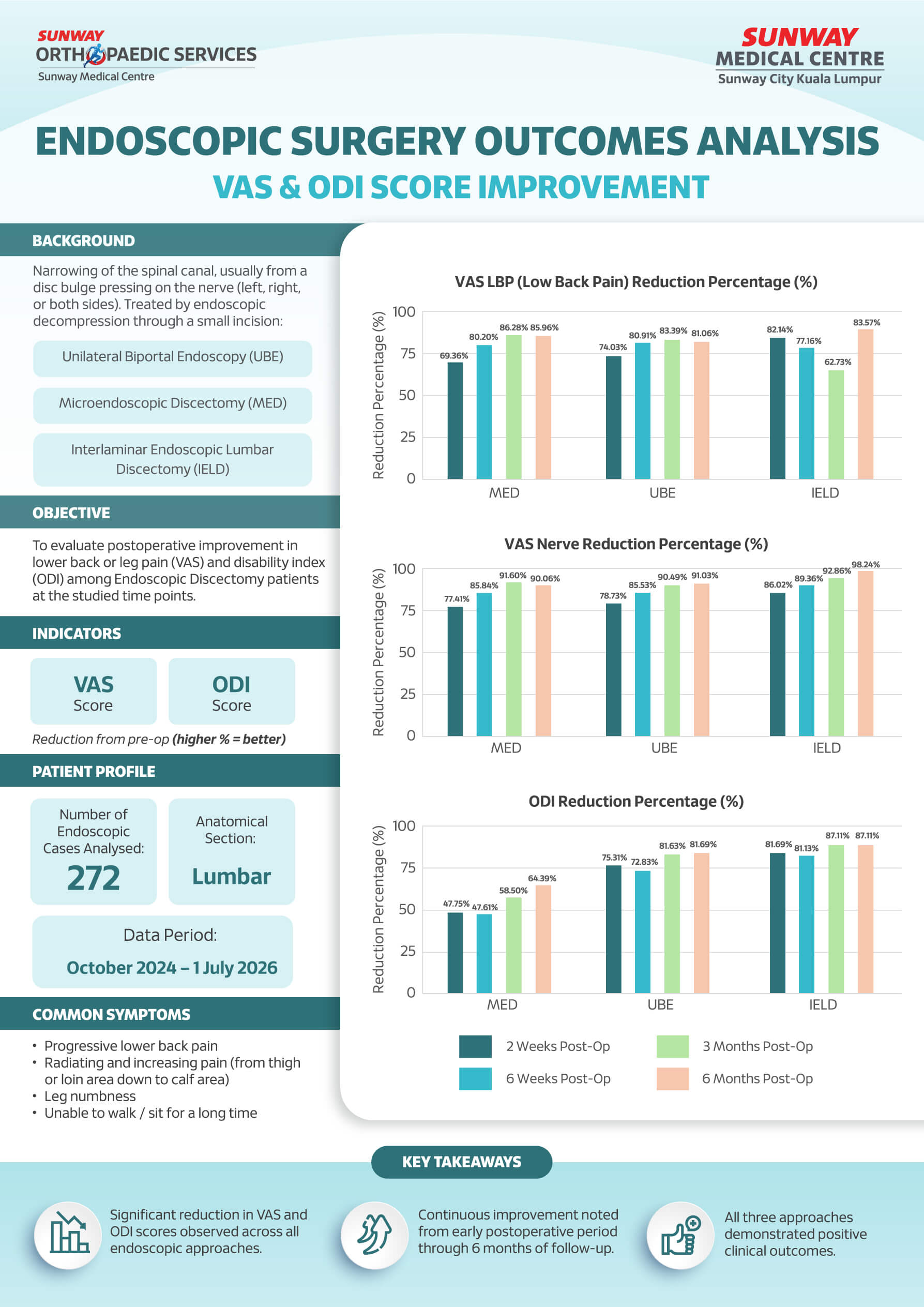
This analysis evaluated post-operative improvement in lower back and leg pain (VAS) and disability (ODI) among 272 endoscopic discectomy patients from October 2024 to 1 July 2026.
The results showed significant reductions in VAS and ODI scores across all three endoscopic approaches studied, namely Unilateral Biportal Endoscopy (UBE), Microendoscopic Discectomy (MED) and Interlaminar Endoscopic Lumbar Discectomy (IELD). Continuous improvement was observed from the early post-operative period through 6 months of follow-up, with all three approaches demonstrating positive clinical outcomes.